Walk down any coffee aisle and you’ll see “single origin” printed on half the bags. It sounds fancy. It isn’t. It just tells you where the beans came from, and that turns out to matter a lot for what ends up in your mug.
What “single origin” means
A single-origin coffee comes from one place: one country, and usually one region within it. The beans weren’t mixed with coffee from anywhere else.
That matters because coffee tastes like where it grew. Altitude, soil, weather and how the coffee is processed all show up in the cup. Keep the beans from one place together, roast them carefully, and you can taste the difference between an Ethiopian and a Guatemalan without being an expert. The bean tells the truth. Our job is to get out of the way.
What a blend is
A blend mixes coffees from more than one origin, or more than one lot, to build a particular taste. Roasters blend for consistency, for balance, or to get a flavor no single coffee has on its own. A good blend isn’t a lesser coffee. It’s a different goal: a cup that’s dependable and rounded instead of one that shows off a single place.
Side by side
| Single origin | Blend | |
|---|---|---|
| Where the beans come from | One country and region | More than one origin or lot |
| What you taste | The character of that place | A balance the roaster built |
| Best for | Tasting differences, pour over, black coffee | Everyday cups, milk drinks, a consistent pot |
What our single origins taste like
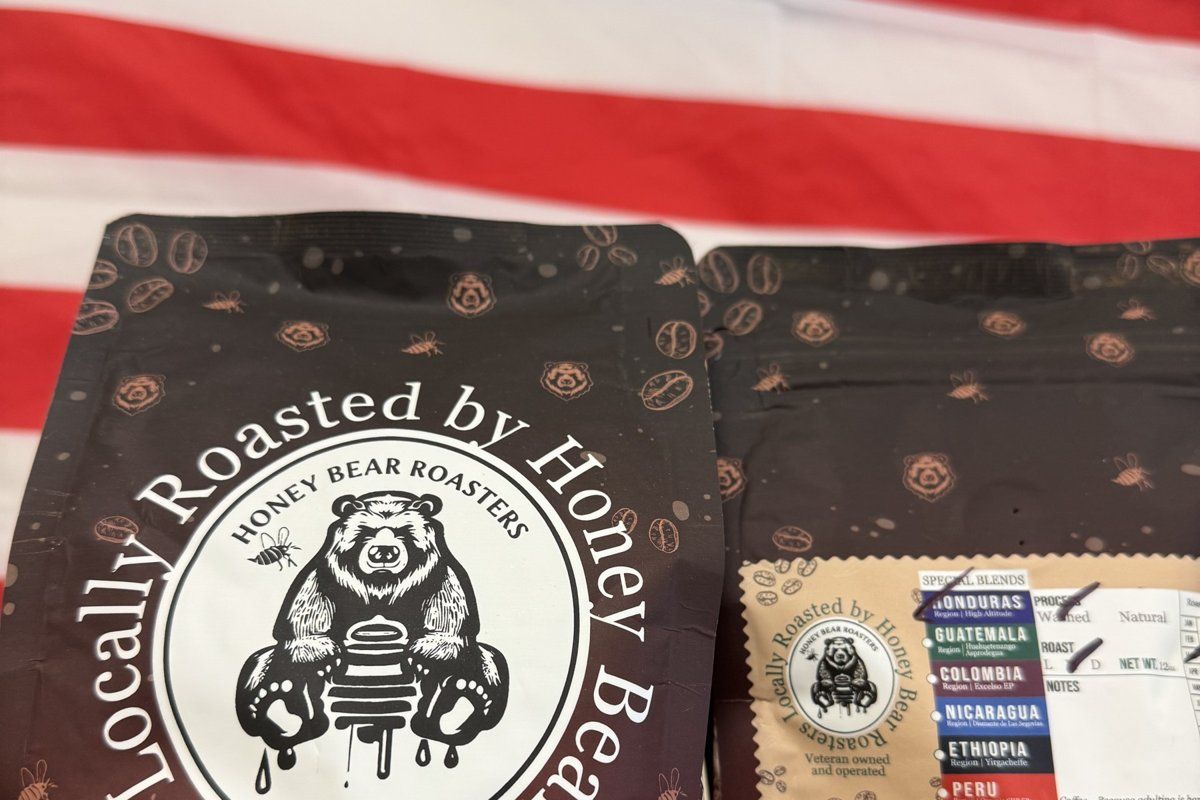
These are the tasting notes from our own bags. Every one is roasted in small batches and stamped with its roast date.
Colombia (Excelso EP): milk chocolate, red fruits and roasted nuts, with a lingering citrus aftertaste.
Ethiopia (Yirgacheffe): stone fruit, brown sugar, floral, black tea, bright citric acid and a juicy body.
Guatemala (Huehuetenango, Asprodegua): milk chocolate, cherries and blackberry, with a citrus finish.
Peru (Organic SHB EP): dried fruit, chocolate, light citrus and almond.
Honduras: medium body and low acidity, with notes of caramel, chocolate, tobacco and citrus.
Most of our 12 oz single origins come in light, medium or dark roast. Lighter roasts keep more of the fruit and brightness. Darker roasts lean into body and chocolate.
And our blend
Next 18 Exclusive is a Guatemalan blend built with beans from Huehuetenango. It’s medium bodied with hints of caramel, milk chocolate, dark chocolate and dried fruit, with gentle acidity. Every bag also sends $3 to Next 18, a registered 501(c)(3) from Wisconsin that runs golf wellness camps for veterans and first responders.
And if you want something that’s neither a straight single origin nor a classic blend, there’s our bourbon barrel-aged Colombia.
Picking one for the way you brew
Our brew guide matches coffees to brew methods. In short:
- Pour over: Ethiopia and Colombia, or any single origin you want to taste cleanly.
- French press: Guatemala and Peru, and darker roasts where you want the body to come through.
- Drip machine: Colombia and Peru, the everyday workhorse coffee for feeding a household.
- Espresso: Colombia, Next 18 and the bourbon barrel-aged coffee, plus darker roasts in general.
Not sure where to start?
Start with Colombia if you like a classic, smooth cup. Start with Ethiopia if you want to see how different coffee can be. Then try one of the others next time. That’s the fun of single origins.
If you’d like to try a few, the Coffee Club lets you swap to a different coffee with every delivery, every 2, 4 or 6 weeks, at 10% off. Our guide to how many cups are in a 12 oz bag helps you pick the schedule.
Shop all of our coffee. Free shipping on orders over $50.